

Generative AI tools such as ChatGPT and Gemini are reshaping how people search for and engage with content, and this change in user behaviour is gathering momentum.
So much so, that Semrush projects that by 2028, annual visitors to LLMs (large language models) will overtake traditional organic search.
However, good website content and strong SEO fundamentals have always centred around answering users’ core questions and ‘meeting search intent’ – providing exactly what users are looking for when they search, whether that’s information, a solution to a problem, or a logical next step.
So, when it comes to optimising content to appear in these new AI platforms, has anything really changed, or is it business as usual?
Below we explore what AI SEO is, how search is evolving and, most importantly, reveal some actionable tips for how best to optimise your content for the changing search landscape.

What is AI SEO (GEO and AEO)?
Firstly, let’s explain the many acronyms currently used when describing AI SEO as it can get confusing.
- GEO = Generative Engine Optimisation.
- AEO = Answer Engine Optimisation.
- AI SEO = Artificial Intelligence Search Engine Optimisation.
In truth, bar a few nuances, these all mean the same thing – they describe the process of optimising your content for citation and visibility within AI answer engines like Chat GPT.
So, what has changed in the SEO approach?
AI SEO focuses much more on the context and relevance of a query within a wider topic and less about specific keywords.
Aside from the increasingly influential LLMs, traditional search engines like Google have also evolved, using AI-powered algorithms (including RankBrain) to better understand the true meaning behind a given search query.
For example, if a user searches for the “most toddler-friendly activities for a day out in London”, Google doesn’t just analyse the words which make up the query. It takes things a step further and tries to understand what “toddler friendly” likely means and prioritises the results accordingly.
This increased level of complexity means businesses may need to step up their game or tweak their approach to remain visible in search. Content must now go beyond simply keyword optimisation to address true user intent and deliver real added value.
How can you optimise your content for AI SEO?
AI SEO has not replaced ‘traditional’ SEO and no, SEO is not dead – as many articles proclaim. Instead, we must look at AI SEO as an extension of the SEO we have been doing for years.

AI SEO – Additional content considerations
#1 LLM crawlers are LAZY – you need to make their life easier to capture information
Always aim to concisely answer the target query, front‑loading your key points so they’re easy for both readers and search engines to identify.
Write primarily for humans but structure your content using clear semantic chunking (tight, well‑labelled sections and logically grouped ideas) so information can be easily scanned and extracted.
Provide a direct response to the core question, then expand with relevant follow‑up details to build deeper topical authority. Checking ‘People Also Ask’ queries can also reveal additional angles worth covering in your content.
Additionally, use semantic‑rich URL structures that reflect the content’s topic and hierarchy, helps both users and search engines better understand the page context.
Writing in a natural and conversational tone is also important because AI models are trained on human-like language, so content that sounds like a real conversation is easier for them to understand, cite, and include in their answers.
#2 Write ‘scannable’ content
Break your content up where possible utilising scannable in-page elements such as bulleted lists, bolded sentences and key messages within a sentence and comparison tables.
Scannable content is important for AI search optimisation because AI systems and users quickly scan pages for relevant information, so clear headings, and concise answers help AI understand, extract and rank content more effectively.
Keep your paragraphs short where possible and focused on one main idea at a time. When you stuff multiple concepts into a single paragraph, it can be hard for AI systems to extract the specific information required. This can also benefit the reader too, improving user engagement.
#3 E-E-A-T signals – taken to the next level (for AI‑Driven SEO)
E‑E‑A‑T (Experience, Expertise, Authority and Trustworthiness) remains fundamental to search visibility – but in an AI‑optimised landscape, the way these signals are evaluated has become far more nuanced.
LLMs don’t just review on‑page content and credentials; they interpret broader web signals such as how your brand is referenced across credible third‑party publications, the sentiment surrounding your product or service, and the consistency between what your brand says and what the internet says about your brand.
To strengthen E‑E‑A‑T for AI‑era search, consider:
- Evaluating where and how your brand is referenced externally
Look beyond the existence of mentions: analyse context, tone, and comparative positioning. For example, review how you appear in increasingly important “best …” listicles, product roundups, comparison reviews, forums (such as Reddit and Quora), and recommendation threads. Assess the methodologies used in third‑party articles and if a competitor is positioned above your brand, analyse why this may be the case and rectify. Think what wording or performance metrics repeatedly surface as these patterns will likely help reveal how LLMs classify or cluster your brand. - Collaborating closely with customer service teams
Customer service teams are often a great place to help better understand real‑world sentiment. Ensure their valuable insights feed into SEO and brand content strategy. Identify:
– Recurring complaints or praise
– What customers misunderstand
– What expectations are consistently not met
– Which features or benefits users repeatedly cite when describing your brand
These are the same signals that often appear in forums, Reddit threads, social chatter, and reviews – places LLMs explore at scale. Aligning customer service narratives with SEO content helps address gaps and reinforce positive sentiment. - Monitoring what external sources quote or reference from your own site.
Find out which statistics, diagrams, product specs, guides, or claims are most commonly cited by journalists, bloggers, and reviewers. These create strong topical and authoritative footprints and can be strengthened, updated, or expanded to help you earn even more high‑quality references. - Contributing thoughtful, experience‑rich insights across niche communities.
Engage in specialist forums and industry groups with genuine value – not keyword‑driven posts. LLMs weigh experiential insights and expert discussions heavily when determining credibility. - Positioning internal subject‑matter experts as visible authorities.
Encourage genuine thought leaders within your business to offer commentary, contribute quotes, appear in expert roundups, and publish original analyses. These authority signals are vital across the ecosystem as LLMs use them to evaluate brand strength. - Leveraging deep case studies and real‑world experience.
Demonstrate hands‑on expertise with detailed case studies, practical examples, and transparent methodologies. LLMs increasingly reward evidence‑based expertise over generic advice.
While SEO has evolved, opportunities have not disappeared – they’ve simply shifted. Businesses now need to become far more strategic, creative, and integrated in how they build and display authority across the entire web, not just their own site.
#4 Is content freshness important?
Yes, whilst the freshness of your content will be more crucial within certain sectors, it’s beneficial to ensure your content is up to date.
Keeping content fresh can improve credibility and, user engagement. Utilising schema mark-up properties such as “datePublished” and “dateModified” is a great way of ensuring your content appears fresh for users, LLMs and search engines.
AI-driven search engines prioritise up-to-date, relevant content to deliver accurate and timely answers, helping your content rank higher in generative AI results.
To help measure these results, there are now many tools available, often at a cost, which can measure AI impressions, citations/links and even your brand sentiment. Alternatively leave this reporting task to our in-house GEO experts to analyse.
AI SEO – Additional Technical recommendations
#1 Crawlability & indexation
Make sure AI bots can crawl and index your content and are not blocked, for example in your robots.txt file, which is more common than you may think.
Also ensure your content is accessible to Googlebot and Bingbot, mainly to ensure you show up in traditional search, but also because LLMs use these indexes in their machine learning.
Auditing a website’s supporting images and videos is also now essential as multimodal search becomes more common, with users increasingly asking AI questions using snapshots rather than simply text alone.
Ensuring these assets are high‑quality, well‑compressed, properly described, and optimised in both filenames and file types helps AI systems accurately interpret and surface your content in visual‑led search experiences.
Lastly, there has been alot of debate within the SEO community regarding whether there is any benefit in deploying a LLM.txt file.
According to Search Engine Journal “LLMs.txt is just a proposal, and no AI platform has signed on to use it” and that the perceived “risk” of not having it is unfounded.
That said, it’s thought that Googlebot does consistently accesses LLM.txt files and so we believe there is no harm in creating one.
#2 Schema mark-up (structured data)
Schema mark-up is code added to a webpage that helps search engines and AI better understand its content and context, improving visibility and the chances of featuring in rich results. It’s been around for many years but has taken on greater importance with the emergence of AI SEO.
LLMs such as ChatGPT favour structured data because it reduces uncertainty and can also speed up extraction. If your content is correctly marked up, it’s more likely to be cited, although don’t overdo implementation, just select the relevant types to your content.
For example:
- ‘Product’ and ‘Service’ schema can help clarify what it is you sell
- ‘FAQPage’ can help LLMs match user queries and surface your answers
- ‘HowTo’ can be used to detail clear step-by-step instructions
- ‘BreadcrumbList’ type can help improve context and how pages relate to each other within a website’s hierarchy
It has never been more important to validate your credentials as a genuine authority in your field in order to remain visible in AI search.
A simple, but effective way of helping achieve this is to use the “Author” schema on a well optimised bio, detailing your experience, expertise, awards/qualifications and skills.
It can also be beneficial to use the “sameAs” property which enables you to align with for example your LinkedIn profile or other relevant articles – supporting your reputation as a true expert.
#3 Site speed & mobile friendliness
Slow, cumbersome websites not only provide a poor user experience, but they could also harm your chances of getting cited in AI- generated results.
Generative search engines pull content from millions of websites and billions of pages. If your website is slow and/or unstable, LLMs will likely cite a more reliable source above yours, regardless of the strength of your content.
In summary
The encouraging news is, if you have historically done traditional SEO well, then you’re halfway there when it comes to AI SEO.
Creating high quality content that benefits the target audience still matters, building backlinks to grow domain authority is still important and highlighting strong E-E-A-T signals is definitely very beneficial.
However, there are some fundamental shifts in what matters in a GEO world. For example, AI platforms don’t just evaluate your backlink profile to understand your authority. Instead, LLMs will analyse where you’re mentioned across the web and in what context, even if this does not result in a link.
They crawl forums such as Reddit and Quora, social media platforms, review sites, and YouTube too – hence the new SEO buzz term: ‘Search everywhere’.
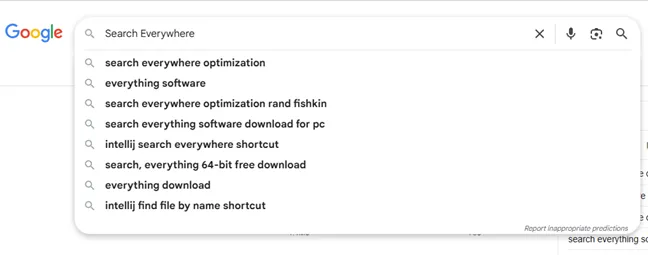
So, focus more on being part of the conversation and adding genuine value for users by clearly answering their query. Look to seed brand mentions in the right context and co-citations to align yourself with other leading authorities in your space.
Whilst traditional search is about ranking high up in SERPs, AI SEO is about getting cited in AI-generated results, however you don’t need to focus on either one or the other. Create mind-blowing content which both ranks organically, and which is perfectly optimised for AI too.
Lastly, don’t be intimidated by the changing face of SEO and see it as an opportunity to get ahead of your competitors. Those who adapt their digital content strategy most effectively will see their search visibility greatly increase.
Looking for help with your AI SEO?
MRS Digital is an award-winning UK SEO agency with a history of proven results for a diverse range of clients. We offer a dedicated in-house AI SEO service to demystify the world of AI and help drive your search visibility in the ever-changing SEO landscape.